NDR RTS Engine
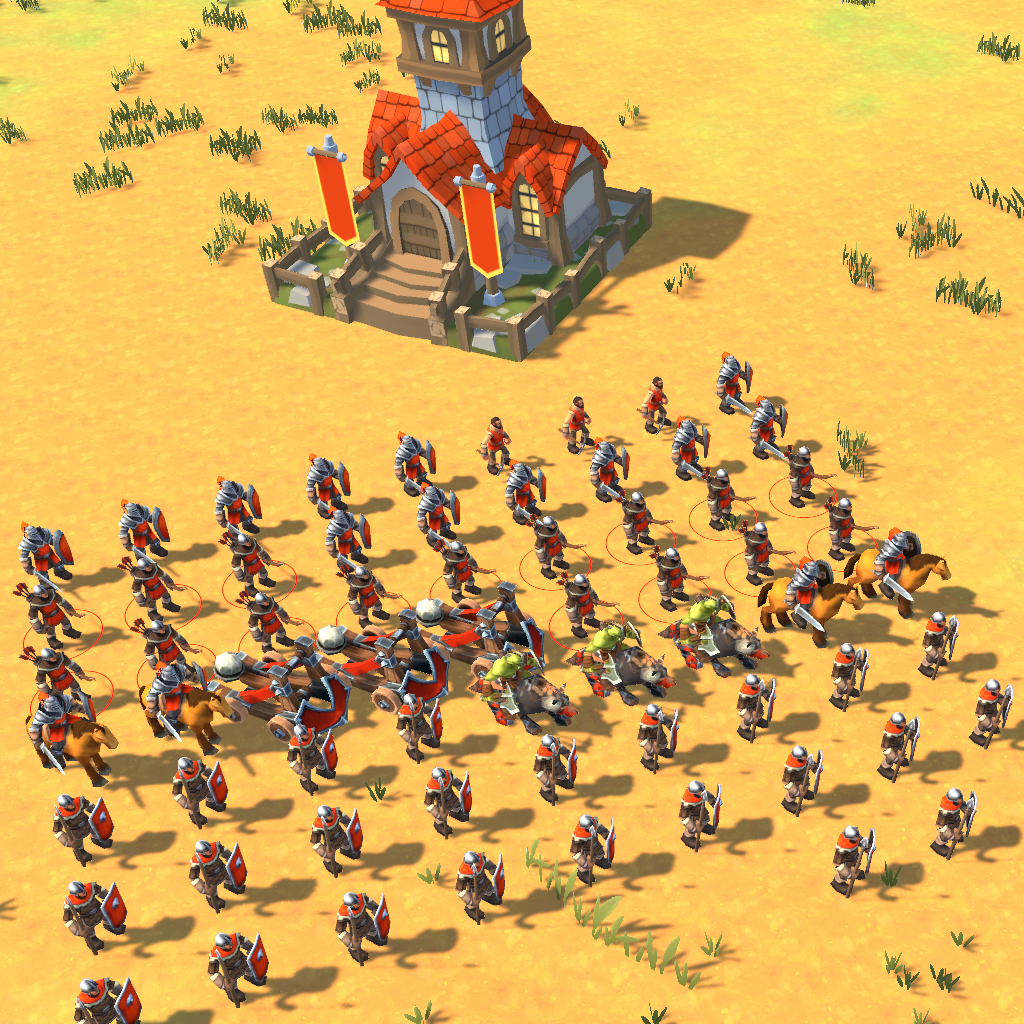
NDR RTS Engine
NDR RTS Engine is a reusable real-time strategy and scenario framework designed to provide the systems required to build complete RTS-style games and interactive military scenarios.
Unlike a traditional game project, the NDR RTS Engine is not a single game.
It is a foundation.
The purpose of the engine is to provide the underlying gameplay systems, architecture, tools, and reusable components from which multiple RTS games and scenarios can be created.
Instead of rebuilding the same systems for every new project, the engine provides a common framework that can be extended and configured for different games, campaigns, factions, maps, missions, and gameplay rules.
One Engine. Many Scenarios.
The central idea behind the NDR RTS Engine is simple:
Build the systems once, then use them to build many different games.
A real-time strategy game may contain dozens of interconnected systems.
Units need to move.
Buildings need to be constructed.
Resources need to be managed.
Players need to issue orders.
AI-controlled factions need to make decisions.
Combat needs to be simulated.
Maps need objectives.
Missions need conditions for success and failure.
Units need to interact with buildings, terrain, resources, and other units.
Rebuilding all of these systems every time a new RTS project begins can quickly become expensive and difficult to maintain.
The NDR RTS Engine approaches the problem by separating the reusable technology from the individual game content.
A Framework for RTS Games
The engine provides the underlying structure required to create RTS-style experiences while leaving the actual game design open to the developer.
This means the same foundation can potentially be used for completely different scenarios.
A historical military scenario can use the same underlying systems as a fictional futuristic conflict.
A small tactical mission can use the same core architecture as a larger campaign.
Different factions can have different units, technologies, buildings, weapons, and objectives without requiring the entire engine to be rewritten.
The engine is therefore designed around reusability.
What Is an RTS Scenario?
An RTS scenario is the actual game experience built on top of the engine.
The engine provides the systems.
The scenario provides the content and rules.
A scenario can define the map, factions, units, objectives, resources, enemy forces, victory conditions, defeat conditions, and other gameplay elements.
This separation allows the technology to remain relatively stable while individual scenarios can change dramatically.
One scenario might involve defending a base against an enemy assault.
Another might require capturing several strategic locations.
Another might focus on gathering resources and building an army.
Another could involve controlling a small force during a tightly scripted military operation.
The underlying engine can provide the systems necessary for all of these experiences.
The Core Philosophy
The NDR RTS Engine was designed around several core principles:
- Reusable systems
- Modular architecture
- Data-driven gameplay
- Separation between engine systems and game content
- Expandable unit and faction systems
- Reusable AI and combat systems
- Scenario-based game design
- Rapid development of new RTS experiences
The goal is not to create one enormous game-specific codebase.
The goal is to create a foundation that can survive beyond a single project.
From Engine to Game
A game created with the NDR RTS Engine can be thought of as several layers.
The bottom layer contains the reusable engine systems.
Above that are game-specific definitions such as factions, units, buildings, weapons, resources, and technologies.
Above those systems are individual scenarios and missions.
The final result is the playable game.
This separation makes it possible to develop technology and content independently.
The engine can continue improving while new scenarios are created on top of it.
Unit System
Units are one of the fundamental components of an RTS game.
The NDR RTS Engine provides a foundation for representing controllable and AI-controlled units within the game world.
Units can have their own properties, capabilities, movement behavior, combat characteristics, and interactions with other entities.
This allows different types of units to be created without requiring an entirely separate implementation for every unit.
A basic infantry unit, armored vehicle, support unit, or other specialized entity can be represented using the same underlying framework while having different data and behavior.
Selection and Control
An RTS is fundamentally about giving the player control over multiple entities.
The engine therefore provides the foundation for selecting units and issuing commands.
The player can interact with units through an RTS-style control system rather than directly controlling a single character.
This creates the foundation for classic strategy interactions such as selecting units, moving them across the battlefield, assigning tasks, and coordinating multiple entities.
Movement
Movement is another fundamental RTS system.
Units need to navigate the game world while responding to player commands and environmental conditions.
The engine provides a reusable movement foundation that can be extended for different types of units and scenarios.
Movement systems can support the larger tactical structure of the game by allowing units to travel between strategic locations, approach objectives, regroup, attack, retreat, and reposition during combat.
Combat Systems
Combat is one of the major systems built around the RTS framework.
Units need to be able to engage opposing forces, receive damage, attack targets, and respond to changing battlefield conditions.
The engine provides the underlying structure necessary for these interactions.
Different units can be configured with different combat characteristics, allowing the scenario designer to create varied military forces without changing the fundamental engine architecture.
This makes it possible to create different gameplay relationships between units.
Fast units can behave differently from heavily armored units.
Long-range units can have different engagement characteristics from close-range units.
Support units can fulfill roles that are different from direct combat units.
The engine provides the foundation, while the scenario determines how those systems are used.
Buildings and Structures
Buildings are another important component of an RTS environment.
They can represent bases, production facilities, defensive positions, resource structures, strategic objectives, or other interactive locations.
The NDR RTS Engine is designed so that structures can participate in the larger gameplay system rather than existing only as static scenery.
This allows buildings to become meaningful parts of the strategy layer.
Resources and Economy
Many RTS games rely on resource management to create strategic decisions.
Players may need to collect, protect, transport, or spend resources in order to maintain their forces and expand their capabilities.
The NDR RTS Engine provides a foundation for integrating resource systems into scenarios.
This allows individual games built with the engine to define their own economic rules.
A scenario can determine what resources exist, how they are acquired, what they are used for, and how resource availability affects the player's strategic options.
Factions
Different factions can be represented using the same underlying engine architecture.
A faction can define its own units, structures, resources, technologies, visual identity, and gameplay characteristics.
This makes it possible to create multiple opposing forces without creating completely independent implementations for each one.
The engine therefore separates the concept of a faction from the underlying mechanics that allow factions to operate.
Artificial Intelligence
RTS games require more than player-controlled units.
Enemy forces must be able to operate independently and respond to the state of the battlefield.
The NDR RTS Engine provides a foundation for AI-controlled entities and scenario logic.
AI systems can be used to control enemy units, manage objectives, respond to threats, and participate in the larger scenario.
The exact behavior can be defined according to the requirements of the individual game.
This allows the same engine to support different AI behaviors across different scenarios.
Scenario Logic
The scenario system is one of the most important parts of the engine.
Instead of hard-coding every mission directly into the engine, scenario logic can define what should happen during an individual game.
A scenario can establish:
- Starting units
- Starting locations
- Player objectives
- Enemy objectives
- Victory conditions
- Defeat conditions
- Resource conditions
- Reinforcements
- Mission events
- Triggers
- Special gameplay rules
This approach allows the engine to remain generic while individual missions become highly specific.
Objectives
Objectives give scenarios their purpose.
A scenario can require the player to capture an area, destroy an enemy force, defend a position, escort units, survive for a specific period of time, collect resources, construct a base, or accomplish another strategic goal.
Objectives can also be combined.
A mission might begin with a defensive objective and later transition into an offensive operation.
The player may first need to survive an enemy attack, then receive an order to counterattack, capture a strategic position, and finally eliminate the remaining enemy forces.
The engine provides the foundation for these transitions.
Victory and Defeat
Every scenario needs to understand when the game has been won or lost.
The engine can evaluate scenario conditions and determine when the required objectives have been completed or when the player has failed.
This creates a clear separation between the general game framework and the specific conditions defined by a scenario.
A particular scenario might consider the destruction of a command center to be victory.
Another might require the player to hold a location for a certain amount of time.
Another might define victory as the survival of a specific unit.
The same engine architecture can support these different rules.
Triggers and Events
Scenarios become much more interesting when the battlefield can react to what the player does.
Triggers and events provide a way for the scenario to respond to gameplay conditions.
An event could occur when a unit enters a particular area, when an objective is completed, when a building is destroyed, when a certain amount of time has passed, or when a specific battlefield condition is reached.
These events can then change the scenario.
Reinforcements can arrive.
New objectives can appear.
Enemy forces can change their behavior.
A new area can become accessible.
A defensive operation can turn into an offensive operation.
This creates the possibility of dynamic mission progression without rewriting the underlying engine.
Scenario-Based Architecture
The scenario-based architecture is what allows the NDR RTS Engine to function as a reusable development platform rather than a single game.
The engine does not need to know every detail of the final game.
It only needs to provide the systems that games can build upon.
The scenario then defines how those systems are combined.
This creates a distinction between:
- Engine: The reusable technology.
- Game: The rules, content, and presentation built on the engine.
- Scenario: A specific playable situation within the game.
This separation is one of the fundamental concepts behind the project.
Designed for Reuse
The biggest purpose of the NDR RTS Engine is reuse.
When developing multiple strategy games, many systems are repeated.
Unit selection is repeated.
Movement is repeated.
Combat is repeated.
Resource management is repeated.
AI foundations are repeated.
Scenario objectives are repeated.
Instead of rebuilding these systems from scratch for every new project, the engine provides a common starting point.
This makes future projects faster to prototype and easier to expand.
Rapid Scenario Development
Once the underlying systems exist, creating a new scenario becomes primarily a content and design task rather than an engine-development task.
A developer can focus on questions such as:
- What is the objective?
- Which factions are involved?
- What forces does each side have?
- Where do they begin?
- What resources are available?
- How does the battlefield change?
- What causes victory?
- What causes defeat?
The engine handles the underlying technology required to make those decisions playable.
From Prototype to Full Game
The NDR RTS Engine can also serve as a foundation for experimentation.
A developer does not necessarily need to know the complete design of a future game before beginning development.
A small scenario can be created first.
A basic map can be tested.
A few units can be added.
Combat can be evaluated.
Then new systems can be introduced as the design develops.
This makes the engine suitable not only for final production but also for prototyping and experimentation.
A Technology Project, Not a Game
It is important to distinguish the NDR RTS Engine from the games that can be created with it.
The engine itself is not intended to be experienced as a standalone game.
It is the technology underneath the game.
The same way a renderer, physics system, networking layer, or gameplay framework can be used by multiple projects, the NDR RTS Engine exists to provide reusable RTS functionality.
The interesting result is therefore not a single executable.
The interesting result is what can be built on top of it.
Potential Applications
The architecture can be used as a foundation for many different types of RTS experiences.
- Military strategy games
- Historical strategy scenarios
- Fictional conflicts
- Small-scale tactical battles
- Large-scale RTS scenarios
- Campaign missions
- Standalone strategy scenarios
- Experimental RTS prototypes
- Custom military simulations
- Scenario-driven strategy games
The engine itself does not dictate the setting.
The setting, factions, units, story, art, and mission design can be built around the technology.
Architecture Over Content
One of the defining aspects of the project is its focus on architecture.
A game can always add another unit.
It can add another map.
It can add another building.
It can add another mission.
But if the underlying architecture cannot accommodate those additions cleanly, the project becomes increasingly difficult to maintain.
The NDR RTS Engine approaches development from the opposite direction.
The architecture is designed to make additional content possible.
The goal is to create systems that can be extended rather than systems that only solve one specific scenario.
Building a Foundation
The development of the NDR RTS Engine is therefore an exercise in game architecture as much as it is an exercise in RTS development.
Every system has to answer an important question:
Can this system be reused?
If a system only works for one specific unit, it may not belong in the core engine.
If a system can provide functionality for many different units, factions, and scenarios, it becomes a candidate for the reusable framework.
This distinction helps keep the engine focused on its actual purpose.
Extensibility
An engine becomes more valuable when it can grow without requiring its foundations to be replaced.
The NDR RTS Engine is therefore designed with extensibility in mind.
New unit types can be introduced.
New factions can be created.
New resource types can be added.
New objectives can be implemented.
New AI behaviors can be developed.
New scenario rules can be introduced.
New gameplay systems can be built on top of the existing architecture.
This makes the engine a continuously evolving technology project rather than a fixed collection of scripts.
The Long-Term Vision
The long-term vision for the NDR RTS Engine is to turn it into a mature foundation for creating multiple RTS experiences without repeatedly rebuilding the fundamental technology behind them.
Instead of starting every new RTS project from an empty Unity scene and rebuilding the same foundations, a new project can begin with an established framework.
The developer can then spend more time on the parts that make each game unique:
- The world
- The factions
- The units
- The maps
- The scenarios
- The objectives
- The story
- The visual identity
- The strategic rules
The technology underneath can continue evolving independently.
More Than an RTS Prototype
Although the project originates from the requirements of real-time strategy games, the broader value of the NDR RTS Engine is the experience gained from designing reusable gameplay architecture.
It is an exploration of how complex game systems can be separated, connected, reused, and extended.
It is also an example of a different approach to game development.
Instead of asking:
How do I make this one game?
The engine asks:
How do I build a system that can make many games?
Project Goals
The primary goals of the NDR RTS Engine are:
- Create a reusable RTS gameplay foundation.
- Separate engine technology from scenario content.
- Support multiple factions and unit types.
- Provide reusable movement and combat systems.
- Support AI-controlled forces.
- Provide scenario objectives and mission logic.
- Support dynamic events and triggers.
- Make new scenarios faster to develop.
- Allow the framework to grow as new projects require additional systems.
- Provide a foundation for future RTS games and experiments.
What Can Be Built With It?
The ultimate purpose of the NDR RTS Engine is demonstrated through the projects that can be created with it.
A developer could build a small tactical mission one day and a larger strategy game later while continuing to rely on the same underlying technology.
The engine can become the common foundation connecting those projects together.
One engine.
Different worlds.
Different factions.
Different battles.
Different rules.
Different stories.
The technology underneath remains reusable.
Development
NDR RTS Engine is a technology and game-development project focused on building reusable systems for real-time strategy games and scenario-driven experiences.
The project represents an effort to move beyond building isolated gameplay prototypes and toward designing reusable game architecture.
Instead of treating every new game as a completely independent codebase, the engine provides a shared foundation that can evolve over time.
As new requirements emerge, new systems can be incorporated into the framework, expanding what future games can do.
The Idea Behind the Engine
Every RTS game begins with a collection of fundamental problems.
How do units move?
How does the player select them?
How do they receive commands?
How do they attack?
How does damage work?
How does the AI respond?
How are resources represented?
How are objectives evaluated?
How does a scenario know when it is complete?
The NDR RTS Engine exists to answer those questions once and turn the answers into reusable technology.
Then the next game can ask a different set of questions.
What world do we want to build?
What armies will fight in it?
What story will the player experience?
What kind of strategy will emerge?
That is where the individual game begins.
One Foundation, Unlimited Scenarios
The ultimate concept behind the project can be summarized in one sentence:
NDR RTS Engine is a reusable system for building RTS games and scenarios without rebuilding the fundamental RTS technology from scratch every time.
It is not a game.
It is the system that games can be built from.
And every new scenario created with it becomes another demonstration of what the engine can do.